


How Everyday Spine Care Can Provide Long-Term Pain Relief
Have you been dealing with back pain for a long time? Are you wondering what you can do to find lasting relief? At Santa Clarita Valley Therapy Services, our McKenzie-trained therapists provide you with answers and a program to help you find relief that lasts!
Your spine is made up of a complex structure of bones, muscles, ligaments, nerves, and discs. These structures work together to support the body and allow us to move around. Most episodes of back pain affect one or a combination of all these components.
Back pain can result from injury, physical activity, or even prolonged inactivity. It can affect people of any age or gender, and often the exact cause remains unclear. Damage to one or more of these structures can result from strain, injury, or prolonged postures and lead to debilitating pain and loss of mobility.
Call Santa Clarita Valley Therapy Services today for an appointment, and let us help you find lasting relief!
“This was my first time attending Santa Clarita Valley Therapy for a shoulder injury. I was warmly greeted and well cared for by the staff. The therapists were kind and very thorough in their instructions and exercises for my shoulder. I highly recommend the SCVT staff for any treatments you may need—they will treat you well! Call them today!“
– Google 5-Star Review
Why Does Back Pain Persist?
Back pain can be one of the most debilitating conditions, affecting up to 80 % of the population at some time in their life. Unfortunately, some studies suggest that up to 90% of low back pain (LBP) diagnoses are non-specific. This lack of certainty means that not only do people suffer from back pain, but the exact cause may be difficult to identify.
Unfortunately, a lot of people don’t seek treatment when back pain arises. They might assume nothing—except for medication and rest—can solve their back pain problem. For some people, lower back pain can even lead to long-term pain and dysfunction.
The good news is that with guidance from your McKenzie-trained physical therapist, you can find solutions to your pain and how to manage it, so you can get back to living the life you enjoy!
Make This Year Your Healthiest One Yet!
Did you make a health-related New Year’s resolution this year? Whether going to the gym twice a week or eating more fruits and vegetables, these resolutions always start with the best intentions–but often fizzle out by Valentine’s Day.
This year, why not have Santa Clarita Valley Therapy Services help you reach your health goals? Schedule an appointment today so we can help you get healthy in the new year. We’ll…
- Conduct a comprehensive physical assessment to pinpoint areas of weakness and/or impairment.
- Help you set realistic and attainable health goals.
- Show you how to make the most of that new gym membership.
- Provide tips for healthy, delicious meals.
- Suggest strategies for integrating more movement into your day-to-day life.
Call today to kickstart your journey toward good health and wellness!

Common Causes of Back Pain?
The source of back pain is most commonly from the spine itself or tissues surrounding the spine. Often back pain starts from injury or irritation of the muscles, joints (including the intervertebral discs and facet joints), nerves or surrounding ligaments, and other soft tissue.
The most common factors associated with back pain are:
- Improper posture or prolonged positions (i.e., prolonged sitting)
- Lifting strains
- Repetitive movements like bending and twisting
- Trauma from accidents or falls
Our McKenzie-trained therapists will assess your particular condition to identify the contributing factors and address all of them. Rather than focusing on one cause of your pain, your therapist will address all of the causes.
Why Choose the Mckenzie Method?
The McKenzie Method is a standardized approach that assesses, treats, and uses prevention strategies to resolve your back pain. By emphasizing the cause-and-effect relationship between movements and positions, your therapist provides you with a program for lasting relief.
One of the main differences with the McKenzie Method is the use of exercises and postures as the foundation for a home exercise program. The McKenzie method is one of the few methods used in physical therapy that advocates for your independence. This emphasis provides you with tools to alleviate your pain and promote your independence so that you can reduce the likelihood of any future episodes.
One of the main characteristics of patients using the McKenzie Method is lasting improvements in pain and function and also a reduction in fear and disability beliefs.
What to Expect from Our Mckenzie-Trained Physical Therapist
If you’re experiencing back pain, contact our McKenzie therapists immediately. Our therapists will perform a thorough physical examination and provide you with solutions that work based on the findings.
The McKenzie assessment enables your therapist to identify what postures and movements are causing pain and what ones alleviate your pain. These particular postures and specific movements become the starting point for treatment.
The main emphasis of the McKenzie method is education and instruction on effective exercises and proper posture. Our goals include:
- Reduce pain quickly through postural education and repeated movements
- Return to normal functioning in daily activities
- Minimize the risk of recurring pain (avoid painful postures and movements)
Your physical therapist will interpret your condition and clarify what postures and movements will resolve your neck pain. McKenzie therapists are guides to point you in the right direction for lasting pain relief.
Sources: https://pubmed.ncbi.nlm.nih.gov/28789465/, https://pubmed.ncbi.nlm.nih.gov/32669487/, https://pubmed.ncbi.nlm.nih.gov/29602304/, https://www.cochranelibrary.com/cdsr/doi/10.1002/14651858.CD004057.pub3/full?highlightAbstract=back%7Cpain, https://www.jospt.org/doi/full/10.2519/jospt.2018.7562, https://academic.oup.com/ptj/article/95/2/267/2684157
Contact Us For an Appointment
Our therapists trained in the McKenzie Method can provide you with the tools to promote your independence in managing the current pain and even future recurrences.
The McKenzie Method is based on results. Call Santa Clarita Valley Therapy Services today for a comprehensive assessment and learn what steps you can take to alleviate your pain for the long term!
An Overview of Age-Related Spinal Conditions
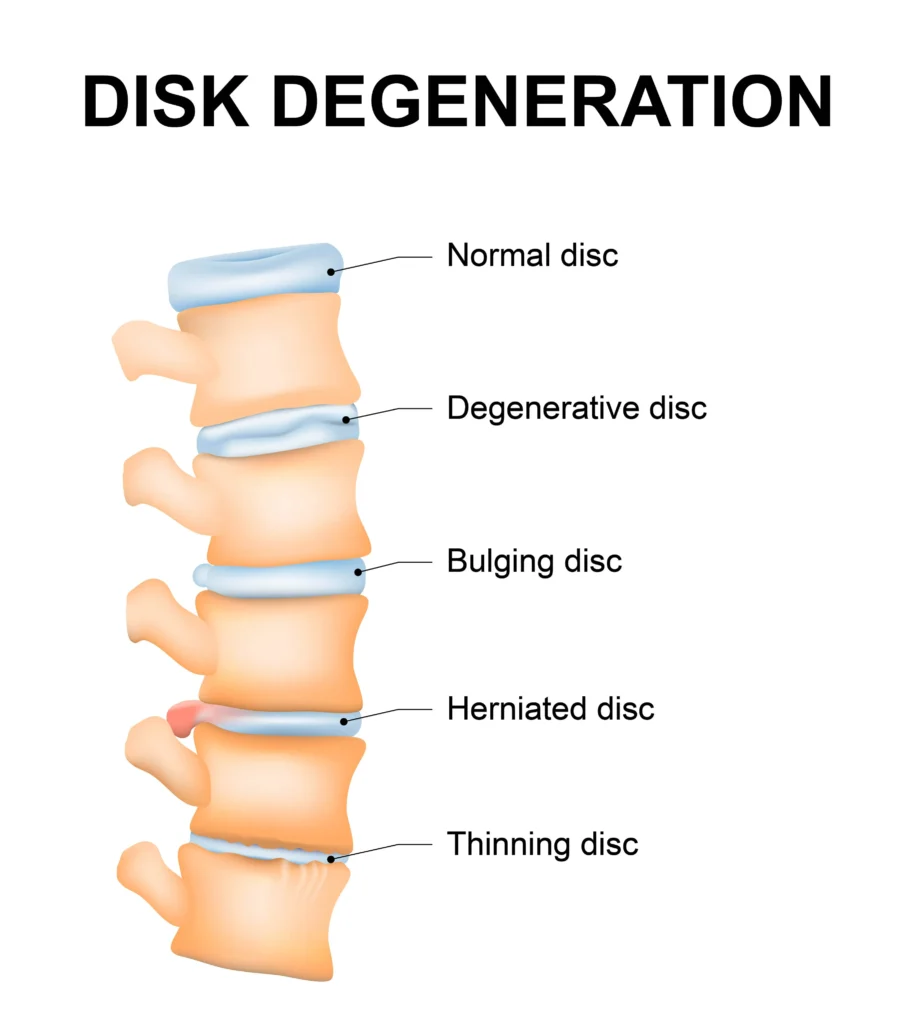
Getting older brings plenty of bodily changes, especially in your spine–and keeping track of them all can be difficult. Today, Santa Clarita Valley Therapy Services wants to share a quick cheat sheet to help you understand the various spinal conditions that can cause back pain and immobility as you age.
- Degenerative Disc Disease: Degenerative disc disease (DDD) isn’t really a disease. It’s a name for the structural changes that occur in your spine’s intervertebral discs as you get older. These discs cushion and protect your spine’s vertebrae and will dry out over time. While this process happens to most people, not everyone necessarily experiences pain. DDD can also contribute to herniated discs.
- Osteoarthritis/Spondylosis: Osteoarthritis (OA) is a form of arthritis that occurs when the cartilage in a joint breaks down, causing the bones to rub together and leading to pain and stiffness. OA can occur in any joint in the body, but when it appears in the spine, it’s also known as spondylosis.
- Spinal Stenosis: Spinal stenosis occurs when the spinal canal narrows around your spinal cord or the canals where the nerves exit the spine narrow, causing pain and radiating numbness.
- Osteoporosis: The other age-related “osteo” condition is a bone disease that occurs when your bone density decreases, which weakens your bones. It doesn’t cause symptoms in and of itself, but it does increase the likelihood of suffering fractures, including in your spine.
Feeling overwhelmed? Don’t worry! In many cases, physical therapy can help prevent and manage these conditions. To learn more, call Santa Clarita Valley Therapy Services to schedule an appointment.

Feel Better by Eating Better!
Juicy Baked Chicken Breast
- 4 (7 to 8 oz) boneless, skinless chicken breasts
- 2 tsp olive oil
- 1 tbsp chili powder
- 1 tsp parsley flakes
- 1/2 tsp salt
- 1/2 tsp black pepper
- 1/2 tsp garlic powder
- 1/2 tsp onion powder
- 1/2 tsp cumin
Pre heat oven to 425 degrees F. Line a baking sheet with foil and spray with non-stick spray. Place the chicken breasts between two sheets of parchment paper and pound to an even thickness. Drizzle both sides of chicken with olive oil. Combine seasonings and sprinkle generously over both sides of the chicken breasts. Bake for 20 minutes. Remove from oven and cover loosely with foil for 5 minutes before slicing.